General

Nebosh courses in Dubai

NEBOSH Course in Dubai – NEBOSH IGC Online UAE – NEBOSH Course in Abu Dhabi

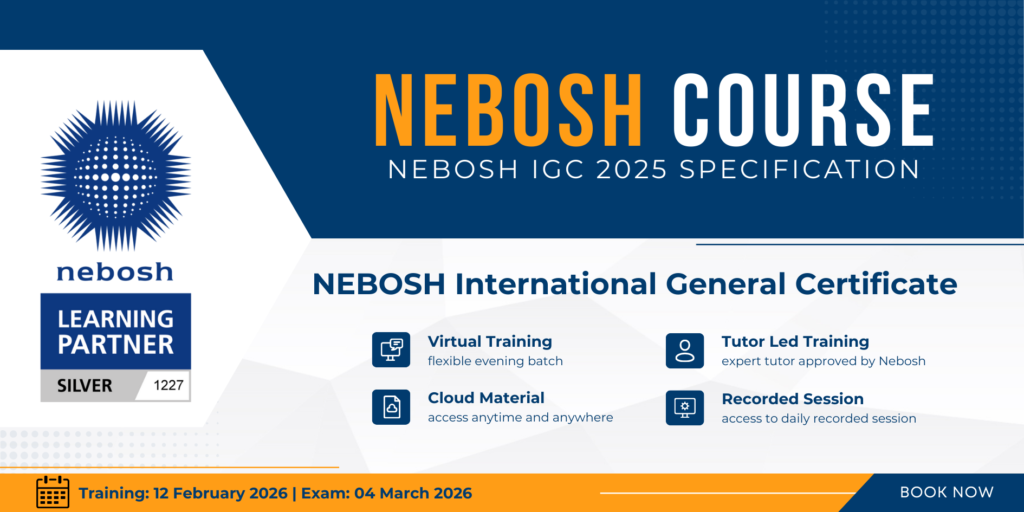
Nebosh Course in Dubai Nebosh IGC Online Training in UAE | Nebosh Course in Abu Dhabi | Best Nebosh training in Dubai, UAE +971 52 244 6410 inquiry@poshesolutions.com Courses Nebosh IGC Nebosh HSL Nebosh PSM ISO 45001 IOSH MS Qualifi IDIP Contact Now NEBOSH Course in Dubai The NEBOSH Course in Dubai is one of the most in-demand professional safety qualifications due to Dubai’s strict health and safety regulations across construction, oil & gas, logistics, real estate, and infrastructure projects. Employers in Dubai consistently prioritise candidates holding the NEBOSH International General Certificate (IGC) for safety-related roles. Dubai-based organisations operate under regulatory frameworks such as Dubai Municipality, Trakhees, and free zone authorities, all of which align closely with international HSE standards. As a result, NEBOSH-certified professionals are considered immediately job-ready. NEBOSH Course Fees in Dubai The cost of a NEBOSH course in Dubai typically ranges between: Pricing depends on training mode (classroom or online), batch type, tutor qualification, and whether NEBOSH exam fees are included and taxes if any applicable. How much does a Nebosh course cost in Dubai? Nebosh courses includes various costs. The Nebosh course costs in Dubai are based on mode of delivery. Generally the Nebosh courses are delivered through Classroom training or virtual or online training and Blended learning. The costs factors changes based on the mode of training your choose. The Nebosh course cost in Dubai, includes Exam registration fees, tutorial fees, materials or learning management system costs, administration costs and taxes. Normally the Nebosh course cost in Dubai is 2300 AED for Nebosh IGC through virtual training. NEBOSH IGC Online UAE The NEBOSH IGC Online UAE option is ideal for working professionals who need flexibility without compromising certification value. NEBOSH fully recognises online training, and the certificate awarded is identical to classroom-based training. Advantages of NEBOSH IGC Online in UAE Is Online NEBOSH Valid in UAE? Yes. NEBOSH does not mention the mode of study on the certificate. Employers in Dubai and Abu Dhabi accept online NEBOSH IGC without distinction. NEBOSH IGC Online Course Structure – 2025 Specification Both units must be passed to achieve certification.  

NEBOSH Course in Dubai – NEBOSH IGC Online UAE – NEBOSH Course in Abu Dhabi Read More »

ISO 45001:2018 OHSMS

ISO 45001:2018 Lead Auditor Training that can change your career to become a qualified HSE Auditor +91 9025802211 inquiry@poshesolutions.com Courses Nebosh IGC Nebosh HSL Nebosh PSM ISO 45001 IOSH MS Qualifi IDIP Contact Now Lorem Ipsum is simply dumy text of the printing typesetting industry lorem ipsum. ISO 45001:2018 Lead Auditor Training What is ISO 45001:2018 Lead Auditor Training? SO 45001:2018 Lead Auditor training is a professional certification course designed for individuals who want to gain knowledge in Occupational Health and Safety Management System (OHSMS) auditing. This course explains ISO 45001 requirements, audit procedures, risk control methods, and compliance standards. Moreover, it helps safety officers, engineers, and supervisors develop skills to plan, conduct, and manage internal and external audits. POSHE Solutions provides ISO 45001:2018 Lead Auditor training in Dubai, Chennai, Trichy, Coimbatore, and Nagercoil with flexible classroom and online sessions. Therefore, candidates can easily join from India or Dubai, Sharjah, UAE and obtain internationally recognized certification for better safety career opportunities.  Nebosh Courses in Trichy Lorem Ipsum is simply dumy text of the printing typesetting industry lorem ipsum. Who can join ISO 45001 Lead Auditor course? ISO 45001 Lead Auditor course can be joined by safety officers, engineers, supervisors, QA/QC professionals, and anyone interested in occupational health and safety. Moreover, NEBOSH, IOSH, and diploma holders can easily understand the course. POSHE Solutions offers ISO 45001 Lead Auditor training in Dubai, Chennai, Trichy, Coimbatore, and Nagercoil, so candidates from India and UAE can join with flexible batch options. What is the duration of ISO 45001 Lead Auditor training? The ISO 45001 Lead Auditor training usually takes 5 days to 7 days, depending on the training mode. Classroom, weekend, and online batches are available.  What is the fee for ISO 45001 Lead Auditor course? The fee for ISO 45001 Lead Auditor course depends on location, training mode, and certification body. Generally, the cost is affordable compared to other international auditor courses. However, discounts may be available for group or early registration. POSHE Solutions offers budget-friendly ISO 45001 Lead Auditor training in Dubai for AED 1300 and Indian students can enrol for INR 32500/- Is ISO 45001 Lead Auditor certification valid internationally? Yes, ISO 45001 Lead Auditor certification is internationally recognized and accepted in industries worldwide. Therefore, it is useful for jobs in construction, oil & gas, manufacturing, and engineering sectors. Moreover, certified auditors can work in India, UAE, Qatar, Saudi Arabia, and other countries. Job vacancies available globally, you can apply directly and attend the interview.  How to become ISO 45001 Lead Auditor? To become an ISO 45001 Lead Auditor, first join a certified training program and complete the exam successfully. Then, gain knowledge in auditing techniques, risk assessment, and ISO standards. After that, practical audit experience will improve job opportunities. POSHE Solutions provides step-by-step ISO 45001 Lead Auditor training in Dubai, Chennai, Trichy, Coimbatore, and Nagercoil with expert guidance.       Download ISO 45001:2018 Standards Click here to download ISO 45001:2018 Occupational Health Safety Management System – Aims and Purpose Aim of ISO 45001:2018 ISO 45001:2018, developed by the International Organization for Standardization, is an international standard that specifies requirements for an Occupational Health and Safety Management System (OH&SMS).  Its primary aim is to provide organizations with a structured framework to prevent work-related injury and ill health while creating safe and healthy workplaces. Purpose of ISO 45001:2018 The purpose of ISO 45001 is to improve overall OH&S performance, strengthen safety culture, enhance operational resilience, and demonstrate a clear commitment to occupational health and safety to stakeholders, regulators, and clients. By aligning with other ISO management system standards such as ISO 9001 and ISO 14001, ISO 45001 also supports sustainable business growth and long-term organizational success. Download ISO 45001:2018 Lorem Ipsum is simply dumy text of the printing typesetting industry lorem ipsum. Book your Seat Now ! Lorem Ipsum is simply dumy text of the printing typesetting industry lorem ipsum.

ISO 45001:2018 OHSMS Read More »

Workplace risk assesment

Risk Assessment at workplace

Why it is important to conduct risk assessment at workplace? Before the Risk Assessment (Preparation): Understanding the Scope: 1.Identifying the Area/Activity: Clearly defining what specific area, task, or process will be assessed. This could be a specific work area (like a loading dock), a particular activity (like using a forklift), or a process (like chemical mixing). Legal and Regulatory Requirements: Knowing the relevant health and safety legislation, industry standards, and company policies that apply to the assessed area/activity. This ensures compliance. Gathering Information: Reviewing existing safety data, previous incident reports, equipment manuals, process documentation, and any other relevant information. Assembling the Team (If Necessary): Depending on the complexity of the assessment, the safety officer might involve other stakeholders, such as: 2. Employees who perform the tasks: They have valuable firsthand knowledge of potential hazards. Supervisors and managers: They can provide insights into procedures and resource allocation. Technical experts: They might be needed for assessing specific equipment or processes. 3. Choosing the Methodology: There are different risk assessment methodologies (e.g., HAZOP, JHA, 5×5 Risk Matrix). The safety officer will choose a method appropriate for the situation. When conducting Risk Assessment 1. Hazard Identification: Systematically looking for potential sources of harm: This involves examining every step of the process or every aspect of the area being assessed. Considering a broad range of hazards: Physical hazards: e.g., slips, trips, falls, machinery, noise, radiation. Chemical hazards: e.g., toxic substances, corrosives, flammable materials. Biological hazards: e.g., bacteria, viruses, fungi. Ergonomic hazards: e.g., poor posture, repetitive movements, heavy lifting. Psychological hazards: e.g., stress, bullying, harassment Using various techniques to identify hazards: Walk-through inspections: Observing the workplace firsthand. Talk to workers: Gathering information from those who perform the tasks. Reviewing past incidents and near misses. Consulting relevant literature and databases. 2. Risk Analysis: Evaluating the likelihood of each hazard causing harm: How often does exposure to the hazard occur, or how probable is it that an incident might happen? Evaluating the severity of the potential harm: What could be the potential consequences of an incident (e.g., minor injury, serious injury, fatality)? Using a risk matrix or scoring system: This is often done to objectively prioritize risks. The matrix usually combines likelihood and severity to determine the overall risk level (e.g., low, medium, high). Considering who might be harmed: Employees, contractors, visitors, members of the public? 3.Risk Evaluation Comparing the analyzed risk levels against pre-defined risk tolerance criteria: Is the level of risk acceptable, or does it require further action? Determining whether existing control measures are adequate: Are current procedures and equipment effectively controlling the identified risks? 4.Risk Controls – Developing Control Measures Following a hierarchy of control (most effective to least effective): Elimination: Remove the hazard entirely. Substitution: Replace the hazardous substance or process with a less hazardous one. Engineering controls: Implement physical changes to the workplace or equipment (e.g., guards on machinery, ventilation systems). Administrative controls: Change work procedures or policies (e.g., safe work procedures, job rotation). Personal Protective Equipment (PPE): Provide workers with PPE (e.g., gloves, safety glasses). PPE should always be a last resort. After the Risk Assessment (Implementation and Review): Documenting the Risk Assessment: Clearly recording all findings: Identified hazards, analyzed risks, evaluated risk levels, and recommended control measures. Using clear and concise language: The document should be easily understood by all relevant parties. Keeping the document readily available: Ensuring the information is accessible for workers and supervisors. Communicating the Findings: Sharing the risk assessment results with relevant stakeholders: Informing workers, supervisors, and managers about the identified risks and control measures. Providing training on new control measures: Ensuring workers understand how to work safely with new procedures and equipment. Implementing the Control Measures: Ensuring the control measures are put in place as recommended. Monitoring the effectiveness of the implemented controls: Are the control measures working effectively to reduce risks? Regular Review and Updates: Periodically reviewing the risk assessment: The frequency of review depends on the level of risk and the nature of the activities. This is especially important after any significant changes in the workplace, procedures, or equipment. Revising the risk assessment as needed: Adjusting the assessment to address new hazards or changes in risk levels. Key Qualities of a Safety Officer Performing a Risk Assessment: Knowledgeable: Possesses a strong understanding of health and safety legislation, best practices, and relevant industry standards. Analytical: Able to critically evaluate hazards, assess risks, and develop appropriate control measures. Observant: Pays close attention to details and can identify potential hazards that might be overlooked. Communicative: Can effectively communicate risk assessment findings and recommendations to diverse audiences. Proactive: Takes initiative to identify and address safety concerns. Organized: Keeps accurate records and documents the assessment process effectively. Summary In summary, a safety officer performing a risk assessment is a systematic process of identifying hazards, analyzing risks, evaluating their severity, and implementing appropriate controls to minimize the likelihood of accidents and injuries. It’s a crucial function in creating a safe and healthy workplace.

Risk Assessment at workplace Read More »

Nebosh online verification

Nebosh Certificate Verification

Nebosh CertificateVerification Nebosh Online Vertification | Nebosh Certificate Verification Process +91 9025802211 inquiry@poshesolutions.com Courses Nebosh IGC Nebosh HSL Nebosh PSM ISO 45001 IOSH MS Qualifi IDIP Contact Now Lorem Ipsum is simply dumy text of the printing typesetting industry lorem ipsum. Nebosh Certificate Verification Employers ensure right candidates are selected in their company for HSE jobs, hence they do Nebosh certificate verification. We have provided a detailed information on the Nebosh certificate verification process below. Prevents Fraudulent Claims Verifying certificates Ensures that only qualified individuals can claim NEBOSH credentials. Protects reputation Maintain reputation Employers hiring fake certificate holders’ risk reputational damage. Legal compliance Lega responsibility In many industries, employers must ensure that health and safety officers are properly qualified. Employer Assurance Build trust among employers Employers can trust the skills and knowledge of candidates holding a verified NEBOSH certification. Nebosh Certificate Online Verification Earning a NEBOSH certification is a significant milestone for health, safety, and environmental (HSE) professionals. However, ensuring the authenticity of your NEBOSH certificate verification is equally important. Employers, recruitment agencies, and learners often need to verify the authenticity of these certificates to confirm the credibility of the holder. This blog will guide you through the  and explain why it is crucial. Learn More Lorem Ipsum is simply dumy text of the printing typesetting industry lorem ipsum. How to Verify a NEBOSH Certification? NEBOSH offers a simple, secure, and direct methods to verify Nebosh certification. Here’s a step-by-step process on how to do it:   If any certificates issued before October 2019 can be verified by clicking the link – Verification   However, certificates issues after October 2019 will no longer be able to do an online verification through the link above.    Certificates provided after October 2019 will have a QR code on the front side of the learner’s parchment. You can scan the QR code to get the certificate verified by following the instructions on the screen.    Visit the official NEBOSH verification page for more details.   If the details match NEBOSH’s records, the verification will be successful, and you will receive confirmation of its authenticity. How Employers Benefit from Nebosh Certificate Verification For employers, ensuring that candidates hold legitimate NEBOSH certifications offers several advantages: Compliance: Comply with national and international safety regulations by hiring certified professionals. Reduced Risk: Avoid liability from hiring unqualified personnel for safety-critical roles. Save Time and Cost: Avoid repeating the hiring process due to the discovery of fake qualifications   How Candidates can Protect their NEBOSH Certification If you’re a NEBOSH certificate holder, here’s how you can protect your credential from misuse: Store Your Certificate Safely: Avoid sharing high-resolution copies of your certificate online or on social media. Secure Your Digital Credentials: If you’re provided with digital credentials or login access, keep it private. Report Lost or Stolen Certificates: If your NEBOSH certificate is lost or stolen, report it to NEBOSH immediately.  To update the email address on your learner record, please use the online form. Change of Details Request Nebosh Certificates issued before 2007 If you wish to verify your employee Nebosh certificate which was issues before 2007. Then, you must do a manual verification – Manual verification request form. Nebosh Online Certificate Verification it is vital for both employer and learners to do know about steps involved in NEBOSH certificate verification. It ensures that only qualified professionals hold roles that require technical competence in health, safety, and environmental management.  By following the steps outlined in this guide, you can easily verify the authenticity of a NEBOSH qualification. Whether you’re an employer seeking to validate credentials or a candidate protecting your achievement, this verification process safeguards credibility and trust in the health and safety sector. Steps to verify your Nebosh Certificate through online Online Verification ServiceOnline Verification Open online verification service – Click here Enter your detailsLearner Info Provide your personal information: Name | Organisation | Email  Enter Certificate DetailsCertificate Details Learner Name (exactly as shown on the certificate) Certificate Master Log Number (found on the front or back of the certificate) Date of Achievement (issue date printed on the certificate) Approval Email ReqeustCheck your Mailbox You will receive an email at the address which you provided at the time exam registration.  Approval request emails will only be sent from: Veri-Secure, noreply@nebosh.org.uk. Open the email and click “Approve“ to confirm the verification. You have 2 days to approve your request before this expires. If you do not receive the authentication email, we may hold a different email on your learner record. Complete the Change of Details Request Form to update (Once NEBOSH have confirmed your email has been updated you can submit your request again – see Step 1). Receive Verification ResultVerification Result After Approval, you will receive an email confirming if the certificate is genuine.  Update Personal Details (If needed)Personal Information If your Date of Birth is incorrect on the confirmation email, complete a Change of Details Request Form. Once NEBOSH have confirmed your record has been updated, complete the process again to receive the email confirmation with the correct Date of Birth.

Nebosh Certificate Verification Read More »

Shopping Cart
Scroll to Top